
0 min read

Refreshing Kape Technologies Visual Identity

Brand Design

Corporate identity

The short version

I led this as an IC project alongside my role as Senior Design Manager - visual audit, logo redesign, typography selection, illustration system, and production mockups.

This is a proposal. Presented to design leads, VP Design, VP Growth, and CMO, who agreed on both the diagnosis and the direction. N

Expected outcomes if implemented:

A complete, consistent brand system designers could work from across all internal and external communications - no more improvising on C-suite requests

A complete, consistent brand system designers could work from across all internal and external communications - no more improvising on C-suite requests

Kape's visual identity separated from PIA's, giving the corporate brand its own character

Kape's visual identity separated from PIA's, giving the corporate brand its own character

Significant reduction in illustration production time - currently 2-4 days per asset, locked to specialists

Significant reduction in illustration production time - currently 2-4 days per asset, locked to specialists

Brand presence that held up against competitors across external channels and social

Brand presence that held up against competitors across external channels and social

The context

Kape Technologies is a cybersecurity and digital privacy company - the corporate entity behind ExpressVPN, CyberGhost, PIA, and Intego. The brand needed to stand on its own: investors, enterprise partners, and every internal and external communication ran under Kape's name, not its products'.

The problem had been accumulating for a while. No complete style guide. No design system. C-suite, HR, and Communications requests for branded materials arrived regularly and left the team improvising each time. Working on a magazine promotion a year before I left, the brand fell apart next to competitors on the page - and I was the Senior Design Manager responsible for it. That was the point where a proposal became necessary.

The story

What was broken

The audit confirmed what the magazine promotion had already shown. No complete style guide, no design system, and years of additions by in-house designers and freelancers with no coordination between them. The brand looked different depending on who had last touched it.

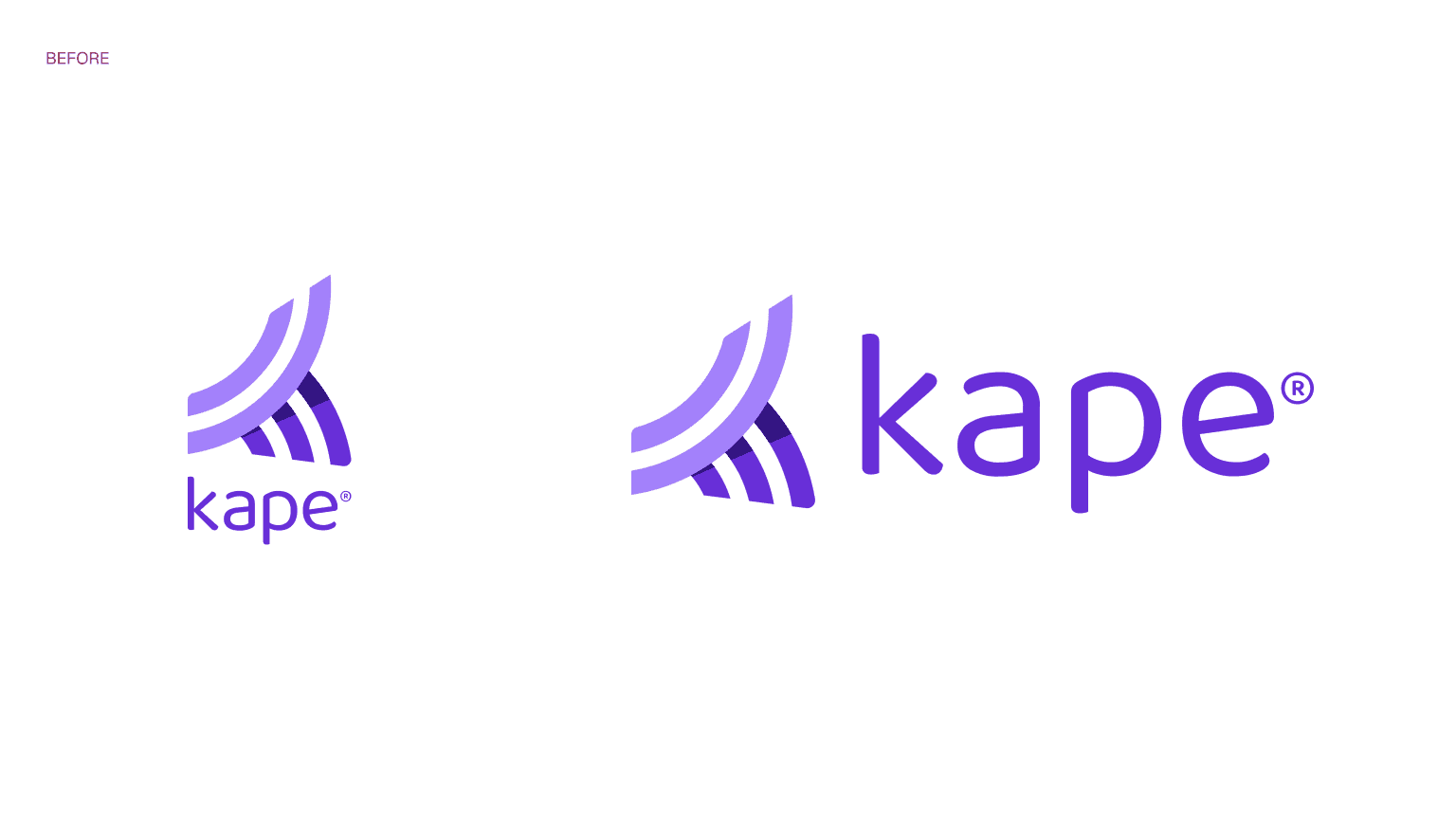
The logo read as playful. In a cybersecurity context, that's the wrong signal. Placed next to competitors, it didn't hold up.

Kape's visual identity refresh followed PIA's rebrand - and the designer working on Kape borrowed PIA's typeface entirely, using it identically, including in the logo. Kape ended up with no typographic identity of its own.

Every illustration in the brand had been hand-crafted as part of the original rebrand - specialist work, two to four days per asset, inaccessible to the rest of the team.

What I decided and why

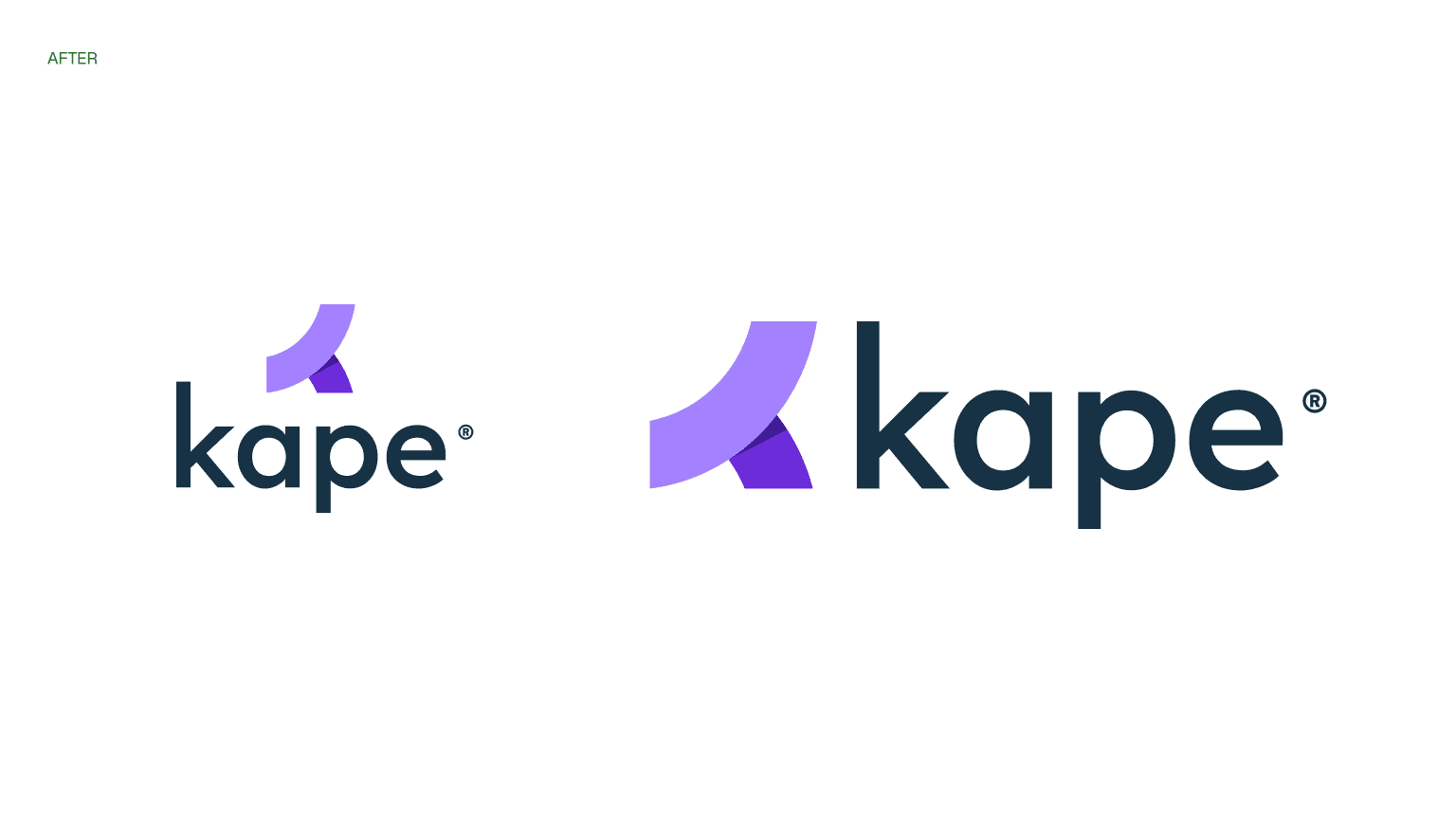
The logo needed to move toward geometry and stability. A corporate brand in cybersecurity needs to read as trustworthy before anything else. Some characters get traded in that direction. Worth it.

Typography required a clean break from PIA. I evaluated several options before landing on Lexend - a variable font with published research behind it showing measurable improvement in reading proficiency. In a brand context where communications regularly carry dense information, a typeface with evidence behind its readability is a more defensible call than one that simply looks right.

The illustration fix was already mostly there. A pre-made modular library was available through the team's existing stock imagery account - scenes built from reusable components, accessible to any designer, needing only minor color customization to align with Kape's palette, but nobody had made it a working system.

The proposal also updated Kape's color scheme - tightening contrast, improving legibility, and creating clearer separation from the sub-brands.

What the work proposed

A refined logo built on geometric structure and proper scaling hierarchy. A typographic system based on Lexend, separated from PIA's identity. An updated color scheme. A modular illustration library any designer could use with minimal customization. The full proposal included production mockups showing the refreshed identity across Kape's actual communications touchpoints.
As you made it so far

Logo: Before and after across light and dark backgrounds. The mark simplified and rebalanced - wordmark primary, symbol supporting. Multiple color variants documented for different environments.

Brand guidelines sheet: Logo variants (primary, stacked, inverted, monochrome), color palette, background and design elements, and merchandise mockups showing the system applied to physical materials.

Illustrations: The proposed library applied to Kape's context - scenes color-customized to the new palette, ready for use by any designer on the team without specialist involvement.

Internal communications: The refreshed identity across the touchpoints HR and Communications used most: letterhead, internal reports, and event banners.

Social presence: The identity applied to LinkedIn and Twitter: branded headers, employee testimonial posts, CEO quote cards, and event announcements.

Alex Dihel | Product & Marketing Design Leadership | Design Operations   www.alexdihel.com © | Privacy

Alex Dihel | Product & Marketing Design Leadership | Design Operations   www.alexdihel.com © | Privacy

Alex Dihel | Product & Marketing Design Leadership | Design Operations   www.alexdihel.com © | Privacy